Woodworm is one of the most common causes of hidden timber damage in homes, particularly in older properties with exposed wooden beams, floor joists, and roof timbers. One of the biggest concerns homeowners have after discovering a woodworm infestation is: How long does it take for woodworm to destroy a beam?
The answer isn’t straightforward. The rate of damage depends on several factors, including the species of wood-boring beetle, the type of timber, moisture levels, and how long the infestation has been active. While woodworm rarely destroys a structural beam overnight, an untreated infestation can weaken timber significantly over several years, potentially leading to expensive repairs or safety concerns.
In this guide, we’ll explain how woodworm damages beams, how long the process typically takes, the warning signs to watch for, and how to protect your property before serious structural damage occurs.
What Is Woodworm?
Despite its name, woodworm is not actually a worm. The term refers to the larvae of several species of wood-boring beetles, including:
- Common Furniture Beetle
- Deathwatch Beetle
- House Longhorn Beetle
- Powderpost Beetle
Adult beetles lay eggs in cracks or crevices of wooden surfaces. After hatching, the larvae burrow into the timber and begin feeding. This hidden stage can last two to five years, although some species remain inside the wood for up to ten years.
Nearly all woodworm damage occurs during this larval stage, long before the adult beetles emerge through small exit holes.
How Does Woodworm Damage a Beam?
Woodworm larvae feed by tunneling through the inside of the timber, creating a network of narrow passages known as galleries.
As they continue feeding, they gradually remove the wood’s internal material while leaving the outer surface relatively intact. This means a beam may appear solid from the outside even though its internal structure has been significantly weakened.
The larvae also produce frass, a fine, powder-like waste material that often falls from exit holes or cracks in the wood.
Over time, repeated generations of beetles can increase the number of tunnels, reducing the beam’s strength and load-bearing capacity.
So, How Long Does It Take?
There is no single timeline because woodworm damage depends on several variables. However, in most cases:
- Minor damage may become noticeable after 2–3 years.
- Moderate structural weakening often develops after 5–10 years if the infestation remains active.
- Severe damage usually results from many years or even decades of repeated infestations rather than a single generation of beetles.
A healthy structural beam is unlikely to collapse solely because of a short-term woodworm infestation. Serious failures usually occur when infestations have been ignored for a long period and are combined with moisture problems or fungal decay.Visit online https://www.shashel.eu for more details.
Factors That Affect the Rate of Damage
Several conditions influence how quickly woodworm can weaken a beam.
Beetle Species
Different species cause different levels of damage.
For example:
- Common Furniture Beetle usually causes gradual deterioration.
- Deathwatch Beetle often attacks older hardwood beams and can cause significant structural damage.
- House Longhorn Beetle is one of the most destructive species, particularly in softwood roof timbers.
Correctly identifying the beetle species is essential for assessing the risk.
Type of Timber
Softwoods such as pine, spruce, and fir are generally more vulnerable than dense hardwoods.
However, hardwood beams can also suffer serious damage, especially when affected by species such as the Deathwatch Beetle.
Moisture Levels
Woodworm thrives in damp timber.
Leaking roofs, plumbing problems, poor ventilation, and high humidity create ideal conditions for larvae to survive and continue feeding.
Dry, well-maintained timber is much less attractive to wood-boring beetles.
Length of Infestation
A single generation of larvae usually won’t destroy a structural beam.
The greatest risk comes from repeated infestations over many years, allowing multiple generations of beetles to tunnel through the same piece of timber.
Warning Signs That a Beam May Be at Risk
Early detection is the best way to prevent serious structural damage.
Look for these common warning signs:
Small Exit Holes
Tiny round holes measuring approximately 1–3 mm are often the first visible sign of woodworm.
Fresh holes usually have clean, light-colored edges.
Fine Powder (Frass)
Fresh frass resembles very fine sawdust and often collects beneath beams or around exit holes.
Repeated appearance of frass may indicate an active infestation.
Soft or Crumbling Wood
If a screwdriver easily penetrates the timber or pieces crumble away, the beam may have suffered extensive internal damage.
Hollow Sound
Lightly tapping the beam may produce a hollow sound if internal galleries are widespread.
Visible Cracks or Sagging
While cracks can occur naturally as wood ages, significant splitting, sagging, or deflection should always be investigated by a professional.
Can a Woodworm-Infested Beam Collapse?
In most cases, no—not immediately.
Woodworm damage develops slowly, and structural beams are typically designed with a safety margin. However, if the infestation has remained untreated for many years and the timber has also been weakened by damp or fungal decay, the beam’s load-bearing capacity can eventually be compromised.
This is especially important in:
- Roof structures
- Floor joists
- Loft beams
- Staircase supports
- Historic buildings
If you suspect severe damage, avoid placing additional weight on the affected area until it has been inspected.
How to Inspect a Wooden Beam
Regular inspections can help identify problems before they become serious.
Check for:
- New exit holes
- Fresh frass
- Soft spots
- Surface cracks
- Signs of moisture
- Live beetles during spring and summer
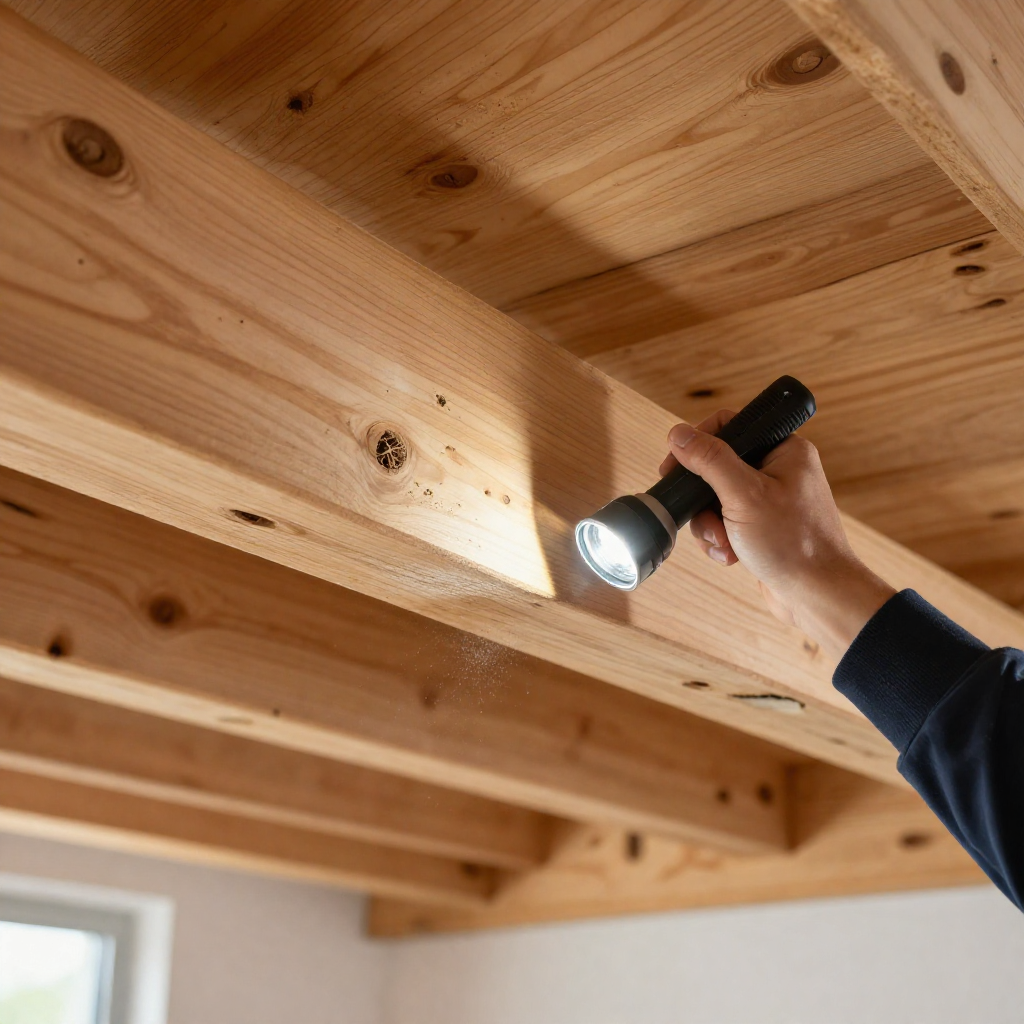
Use a flashlight to inspect lofts, basements, and other poorly lit areas where woodworm is more likely to go unnoticed.
How to Prevent Woodworm Damage
Preventing woodworm is much easier than repairing structural beams.
Here are some effective preventive measures:
- Keep timber dry and well ventilated.
- Repair roof leaks and plumbing issues promptly.
- Reduce indoor humidity.
- Treat exposed timber with appropriate wood preservatives.
- Inspect roof spaces and floor joists regularly.
- Address damp problems before they become severe.
- Arrange periodic timber surveys for older properties.
Maintaining dry conditions is one of the most effective ways to discourage wood-boring beetles.
What Should You Do If a Beam Has Woodworm?
If you suspect an infestation:
- Do not panic. Many woodworm infestations are localized and can be treated successfully.
- Check whether the infestation is active. Fresh frass and new exit holes are stronger indicators than old holes alone.
- Arrange a professional inspection. A timber specialist can determine the extent of internal damage.
- Treat the infestation promptly. Depending on the species and severity, treatment may include insecticidal applications, localized timber replacement, or structural repairs.
Avoid replacing beams unnecessarily until a professional assessment confirms the level of damage.
When Should You Call a Professional?
Professional assistance is recommended if:
- Structural beams show visible weakening.
- Fresh frass continues to appear.
- New exit holes are forming.
- The timber feels soft or unstable.
- Multiple beams are affected.
- You own an older or historic property.
A qualified timber preservation specialist can identify the beetle species, assess the beam’s structural condition, and recommend the most appropriate treatment.
Conclusion
Woodworm rarely destroys a beam quickly. In most cases, serious structural damage develops gradually over many years of untreated infestation, often combined with damp conditions or fungal decay. While a single generation of larvae is unlikely to cause catastrophic failure, repeated infestations can significantly weaken timber if left unchecked.
The key to protecting your home is early detection. Regular inspections, proper moisture control, and prompt treatment can stop woodworm before it compromises the strength of your beams. If you notice fresh exit holes, powdery frass, or signs of weakened timber, seeking professional advice is the safest way to preserve your property’s structural integrity.